
Ligustrum sinense
Common Name: Chinese privet
Family: Oleaceae
Common Synonyms: none
USDA Hardiness Zone: Zones 6-9
Growth Habit: Shrub
Origin: China
FISC Category: 1
FDACS Listed Noxious Weed: Yes
Introduction Date: 1852
IFAS Assessment:
- North: PROHIBITED
- Central: PROHIBITED
- South: PROHIBITED
Description
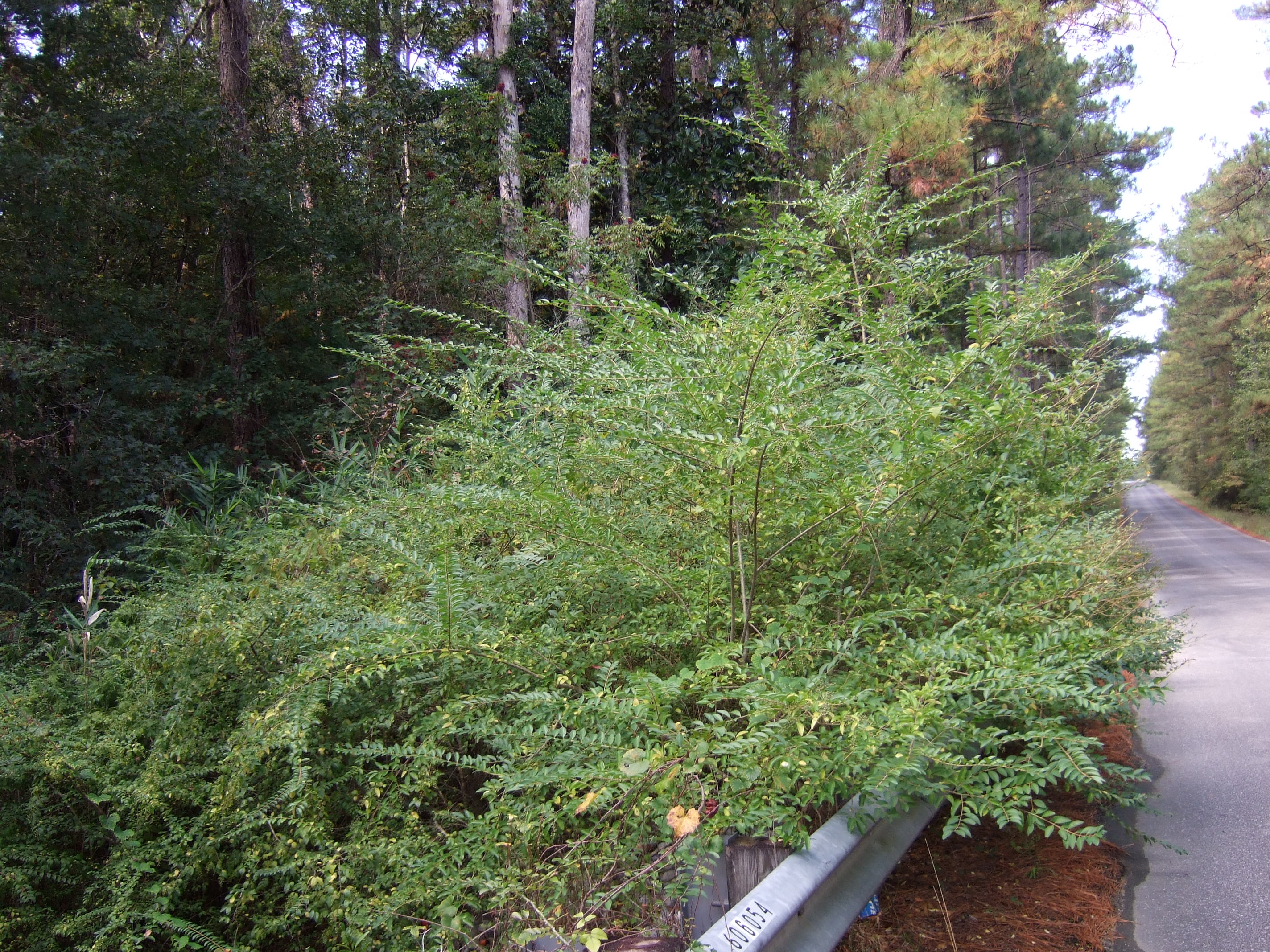
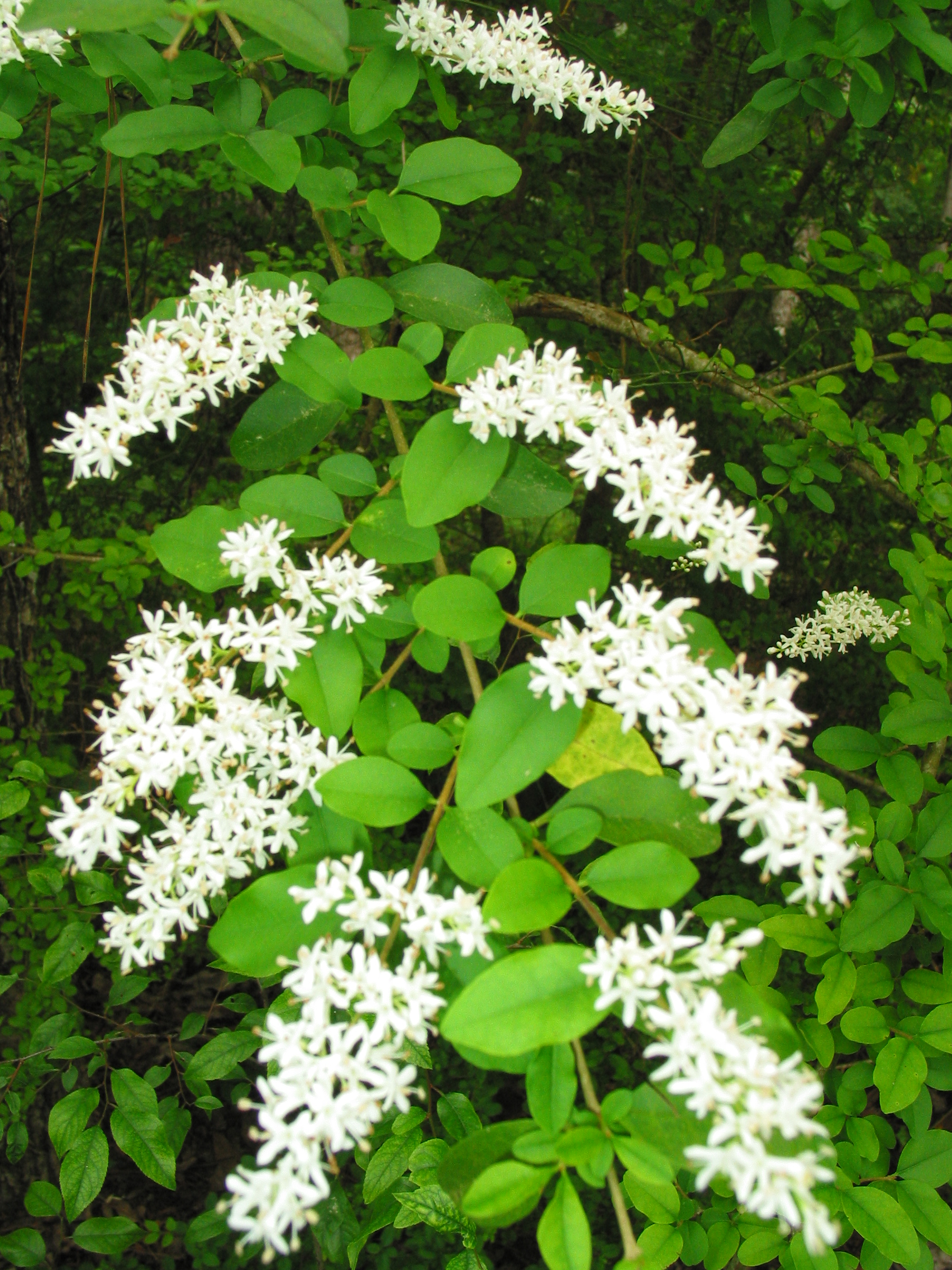
Shrub that can grow up to 5 m high. Bark and stems light tan, smooth. Leaves opposite, small, and elliptical shaped. Flowers cream-colored, in panicles, and fragrant. Fruits bluish-black drupes with up to 4 seeds.
Habitat
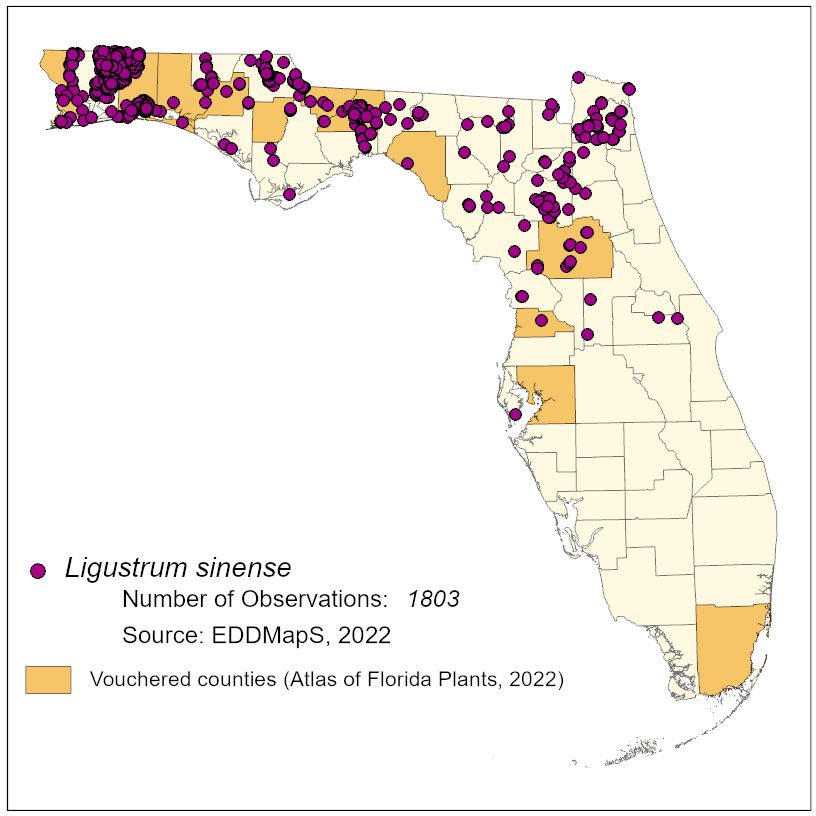
Ruderal, open disturbed areas, low wet sites such as floodplains, but also occurs in dry hammocks and pinelands.
Comments
Prolific seed producer. Aggressively invades natural areas forming dense thickets. Variegated cultivars available in horticulture. Grows readily from root and stump sprouts. Fruits are distributed by birds and water.
Control Methods
- Manual: Mechanical: Mowing and cutting, physical control such as seedling removal and burning.
- Chemical: Foliar in late autumn or early spring when many native species are dormant (2% triclopyr amine), basal bark to bottom 12-15 inches of stems (15%-25% triclopyr ester, undiluted Pathfinder II), cut stump (25% triclopyr amine or glyphosate) . [IFAS, CAIP]
- Biological: No known biological control
Control Notes
Best time to apply foliar sprays are when the shrubs are in leaf in early spring or late fall when other surrounding native plants are dormant.
References
IFAS, Center for Aquatic and Invasive Plants. 2017. Ligustrum sinense. http://plants.ifas.ufl.edu/plant-directory/ligustrum-sinense/Accessed September 19, 2017.
IFAS, UF. 2017. Assessment of Non-Native Plants in Florida's Natural Areas. Ligustrum sinense. https://assessment.ifas.ufl.edu/assessments/ligustrum-sinense/Accessed September 19, 2017.
Dave's Garden. 2017. PlantFiles. Chinese privet (Ligustrum sinensis). http://davesgarden.com/guides/pf/showimage/35928/Accessed September 19, 2019.
Langeland, K.A. and K. Craddock Burks. 1998. Identification and Biology of Non-Native Plants in Floridas Natural Areas. IFAS Publication SP 257. University of Florida, Gainesville. 165 pp.