
Iris pseudacorus
Common Name: paleyellow iris
Family: Iridaceae
Common Synonyms: none
USDA Hardiness Zone: 4a-9a
Growth Habit: Perennial Herb
Origin: Eurasia, North Africa, New Zealand
FISC Category: -
FDACS Listed Noxious Weed: No
Introduction Date: Probably by the mid-20th century
IFAS Assessment:
- North: HIGH INVASION RISK
- Central: HIGH INVASION RISK
- South: HIGH INVASION RISK
Description
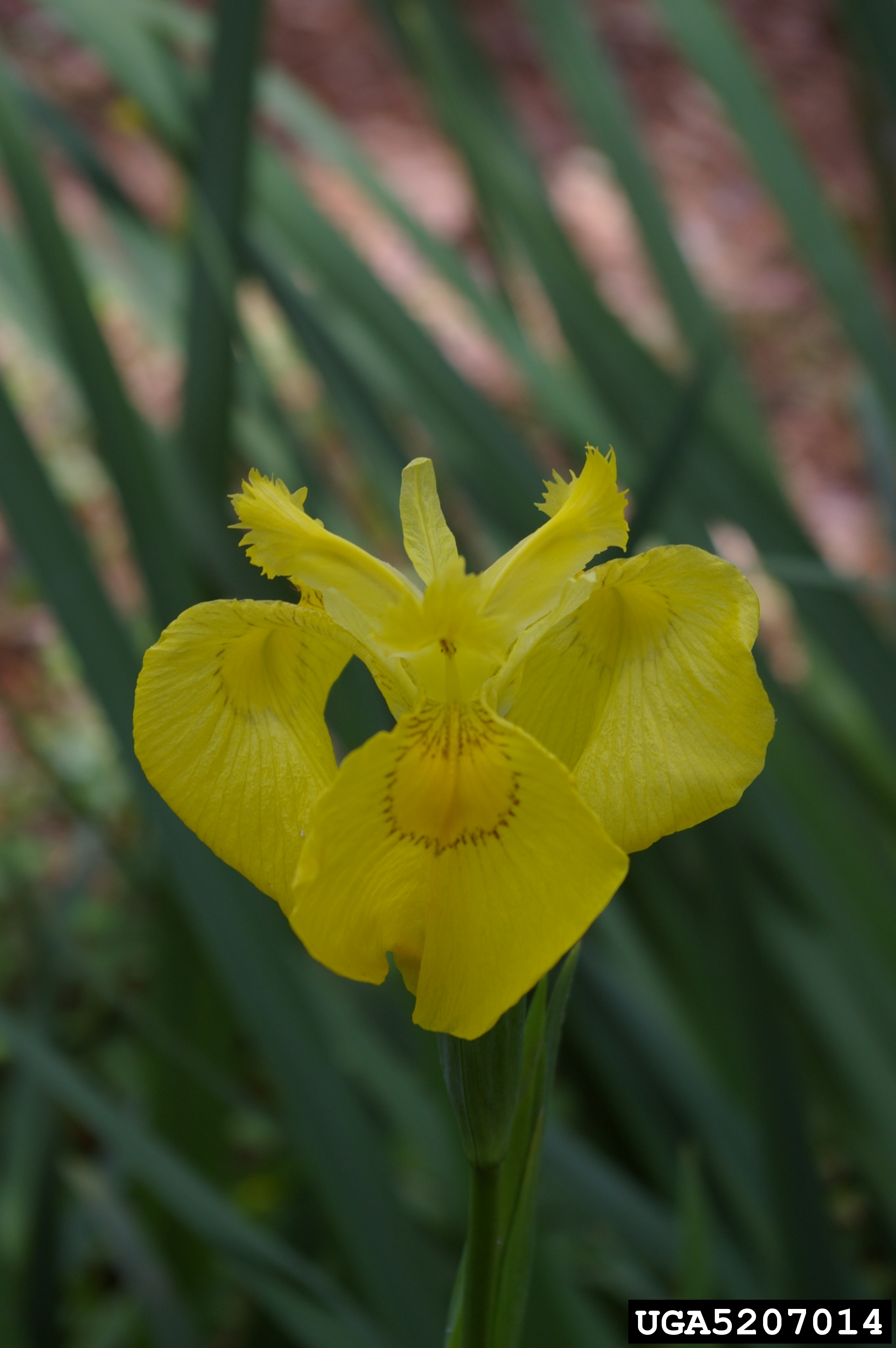
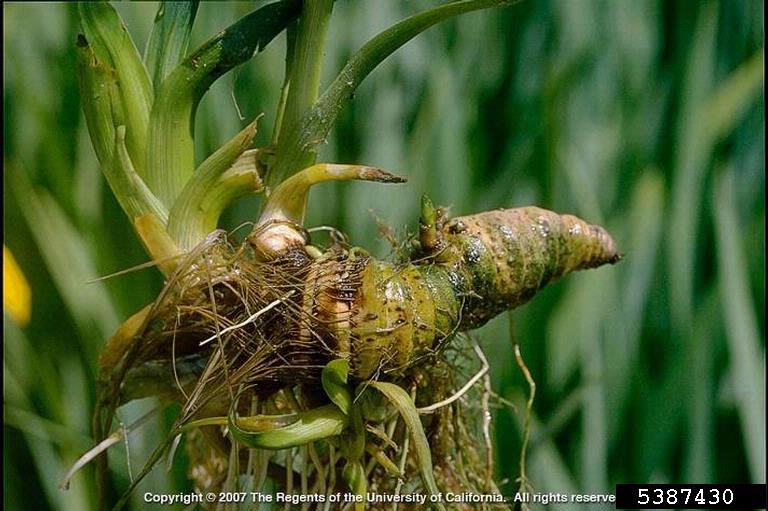
Perennial herb arising from a thick rhizome with black sap. Long, sword-shaped leaves are 10-30 cm wide and up to 1 m in length. The flowering stalk produces several yellow flowers, each subtended by a large, solitary bract. Flowers are 8-10 cm in diameter and typical of other irises - with three sepals and three petals situated on top of the inferior ovary and three stamens hidden beneath the three petal-like style branches. The petals often have purple veins and an orange spot at the base. Capsules are three-chambered and 4-8 cm long.
Habitat
Riparian areas, usually on wet, but not necessarily submerged, soil
Comments
Pale yellow iris tolerates low oxygen levels. Glycoside levels in leaves make these plants unpalatable to livestock.
Control Methods
- Manual: Mechanical: All rhizomes must be removed and disposed of away from riparian areas. Repeated mowing or clipping may prevent seed production and deplete energy reserves (USDA).
- Chemical: A 5% solution of an aquatic label glyphosate applied to actively growing foliage in late spring-early summer has been most effective (USDA).
- Biological: NA
Control Notes
NA
References
Dave's Garden. 2014. PlantFiles: Yellow Flag, Iris pseudacorus. http://davesgarden.com/guides/pf/go/666/#b. Accessed on June 30, 2014.
IFAS, Center for Aquatic and Invasive Plants. 2014. Yellow Flag. http://plants.ifas.ufl.edu/node/205. Accessed on June 30, 2014.
Jacobs, J., M. Graves, and J. Mangold. 2010 Plant guide for paleyellow iris (Iris pseudacorus). http://plants.usda.gov/plantguide/pdf/pg_irps.pdf. USDA-Natural Resources Conservation Service, Montana State Office. Bozeman, Montana 59715