
Cupaniopsis anacardioides
Common Name: carrotwood
Family: Sapindaceae
Common Synonyms: Cupania anacardioides
USDA Hardiness Zone: 11-8
Growth Habit: Tree
Origin: Australia and New Guinea
FISC Category: 1
FDACS Listed Noxious Weed: Yes
Introduction Date: 1955
IFAS Assessment:
- North: PROHIBITED
- Central: PROHIBITED
- South: PROHIBITED
Description
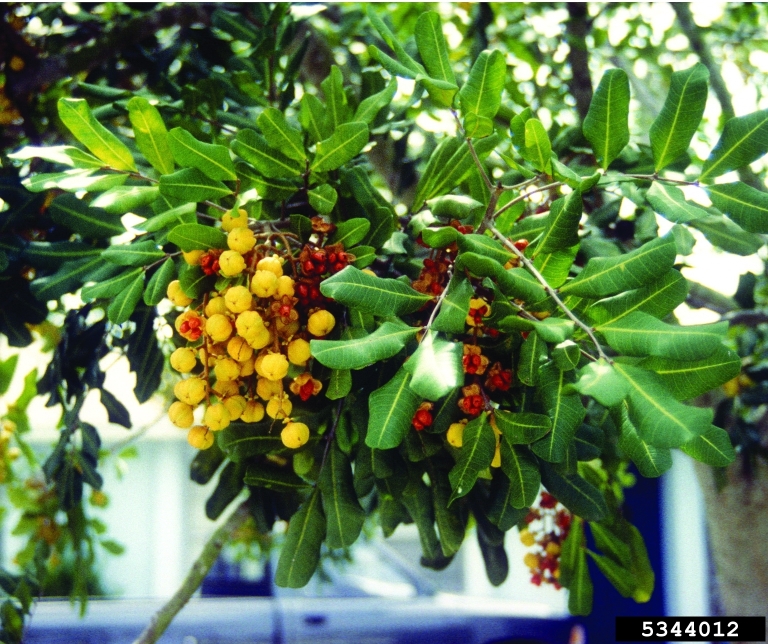
Evergreen tree to 10 m tall, usually single trunked. Leaves alternate, compound (4-12 oblong, stalked leaflets), leathery and shiny yellowish-green with entire margins and rounded tips. Numerous white to green tiny flowers in branched clusters in leaf axils. Fruit orange woody capsule with 3 distinct segments and 3 shiny oval seeds inside.
Habitat
Dunes, tropical hammocks, pinelands, mangrove swamp, scrub, coastal strand, cypress swamps
Comments
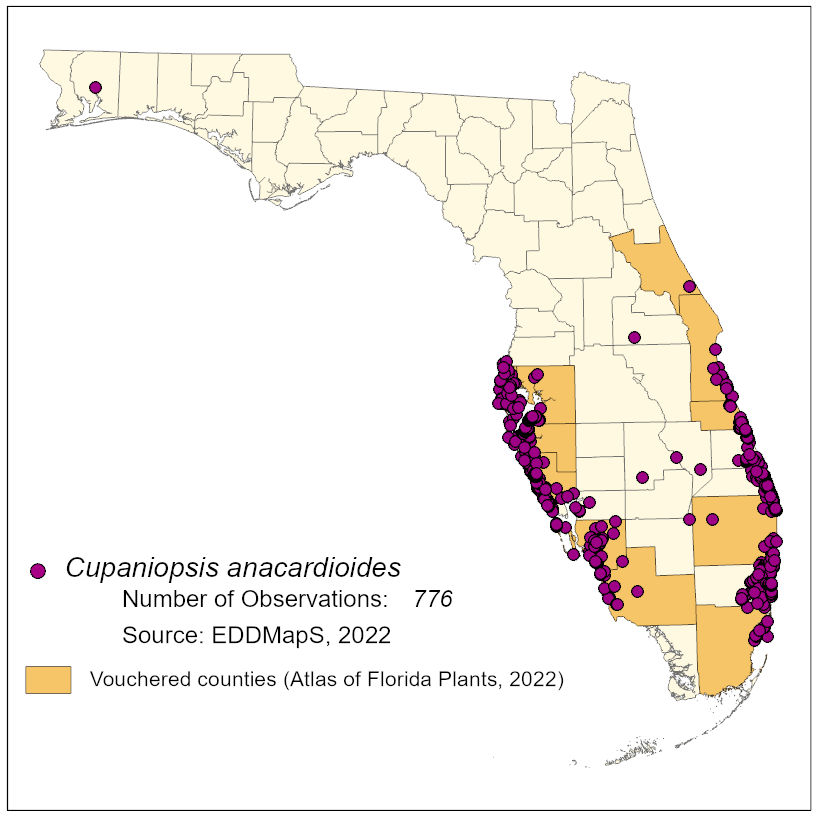
Vouchered north to Volusia Co, established in south. Seeds readily dispersed by birds. Salt tolerant.
Control Methods
- Manual: NA
- Chemical: Basal bark (10-20% triclopyr ester or undiluted Pathfinder II), cut stump (10-50% triclopyr amine or undiluted glyphosate), frill and girdle (10-20% triclopyr ester). [IFAS]
- Biological: NA
Control Notes
Note: Read label restrictions regarding high tide mark and be very careful near mangroves (IFAS). Seeds need to be properly disposed of. **Follow herbicide labels: Only herbicides registered for application in water by EPA and FDACS may be applied to weeds growing in or near water.
References
Gilman, E.F. and D.G. Watson. 2007. Cupaniopsis anacardiopsis: Carrotwood. EDIS publication EN-380. University of Florida, Gainesville, Florida.
Langeland, K.A. 2012. Natural Area Weeds: Carrotwood (Cupaniopsis anacardioides). EDIS publication SS- AGR-165. University of Florida, Gainesville, Florida.
Langeland, K.A., H.M. Cherry, C.M. McCormick, K.C. Burks. 2008. Identification and Biology of Non-Native Plants in Florida's Natural Areas-Second Edition. IFAS Publication SP 257. University of Florida, Gainesville, Florida.
Langeland, K.A., J.A. Ferrell, B. Sellers, G.E. MacDonald, and R.K. Stocker. 2011. Integrated management of non-native plants in natural areas of Florida. EDIS publication SP 242. University of Florida, Gainesville, Florida.