
Sesbania punicea
Common Name: purple sesban
Family: Fabaceae
Common Synonyms: Sesbania tripetii, Aeschynomene miniata, Daubentonia punicea, Emerus puniceus, Piscidia punicea
USDA Hardiness Zone: 8a-11
Growth Habit: Forb/Herb, Subshrub
Origin: South America
FISC Category: 2
FDACS Listed Noxious Weed: No
Introduction Date: Earliest Florida specimen available vouchered in 1897
IFAS Assessment:
- North: CAUTION
- Central: INVASIVE
- South: INVASIVE
Description
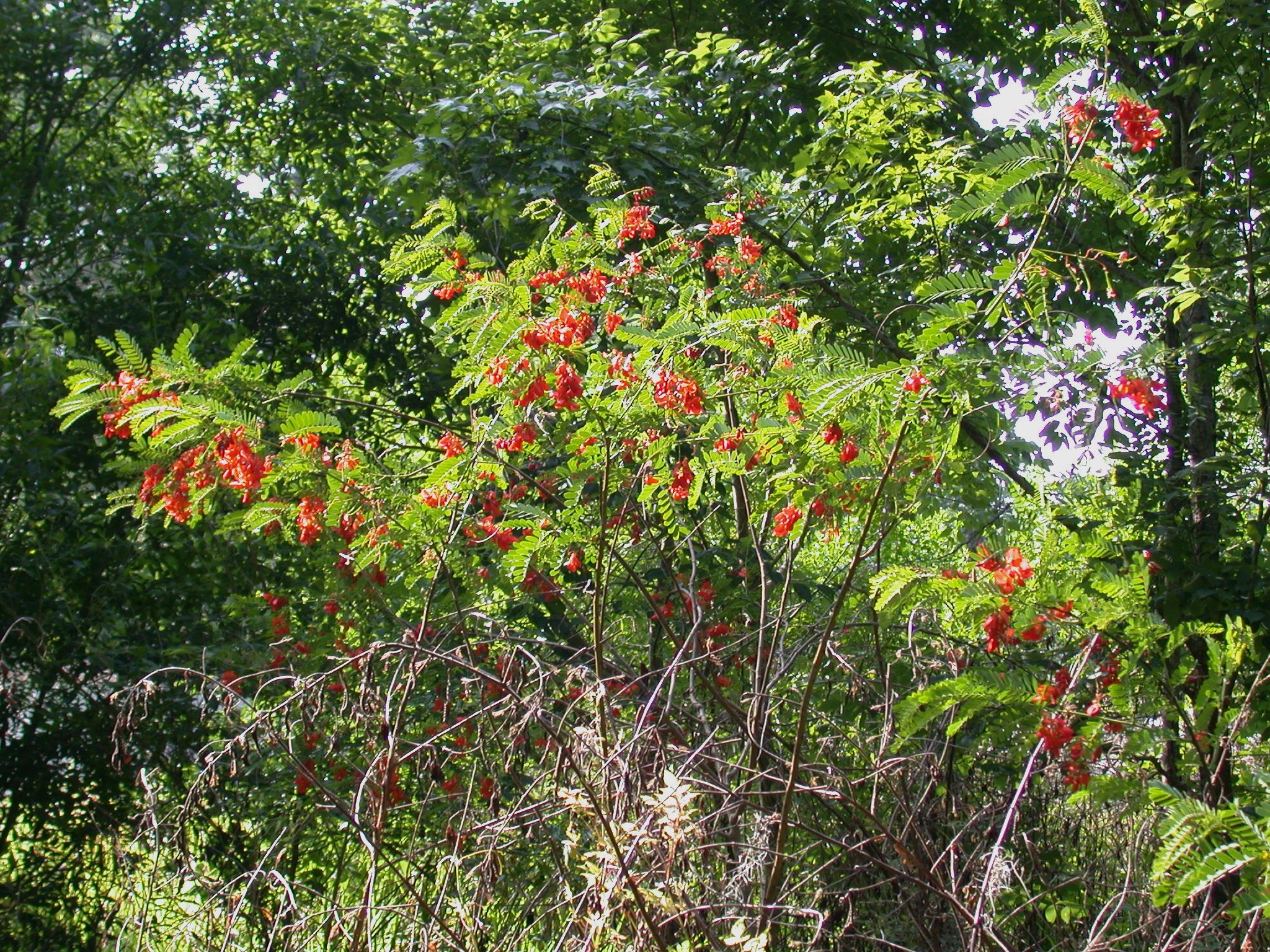
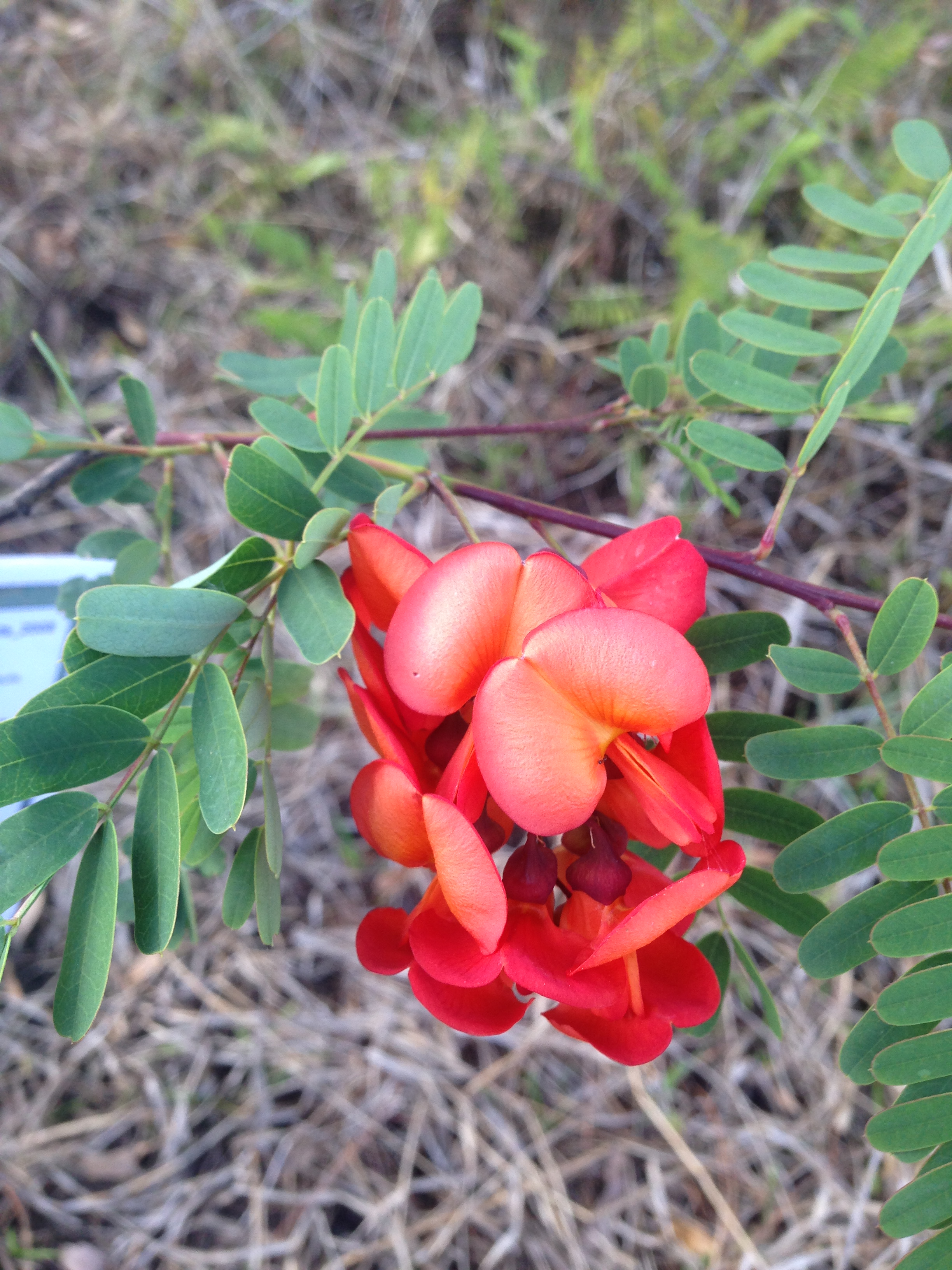
A woody shrub to 4-5 m high. The bark is gray to reddish brown in color. The leaves are alternate, compound, and are 12-18 cm long. The flowers are red to orange-red and the fruit are conspicuously 4-winged. The seed pods are 7-10 cm long.
Habitat
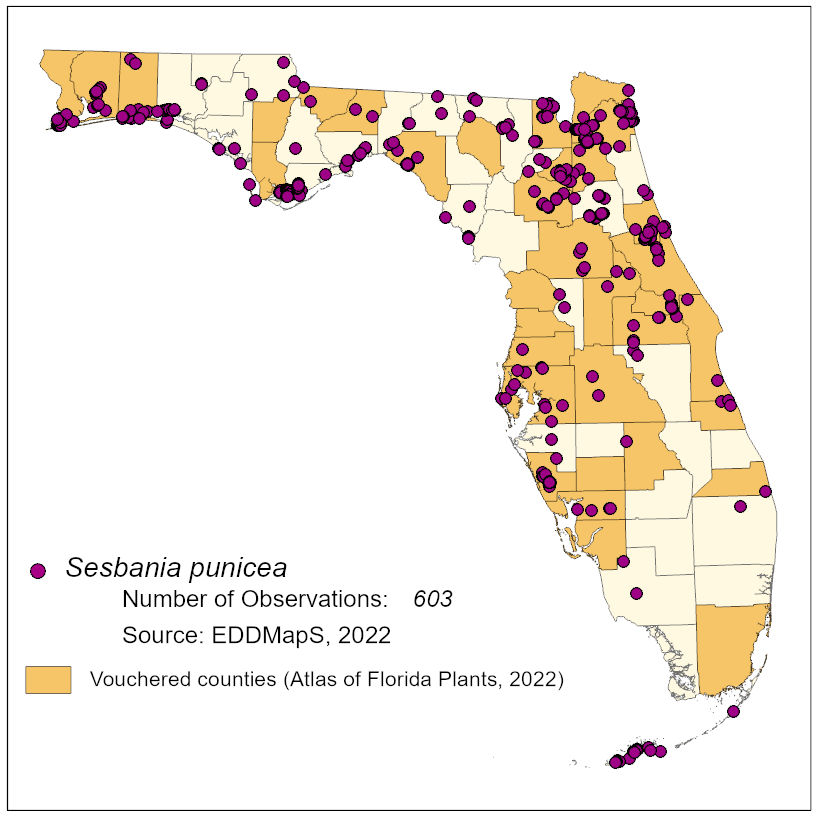
Found in most of Florida, occurs in wetlands and brackish marshes. Tidal marshes and moist, disturbed sites.
Comments
Produces abundant seeds and is an aggressive wetland invader. Seeds may be spread great distances through water. Survives frost. Escaped from cultivation.
Control Methods
- Manual: Cut larger plants and treat stumps. Pull young plants by hand or with a weed wrench. Mowing will help but is often not feasible due to wet soil conditions where this species prefers. Mechanical control prior to seed set will be helpful in controlling future infestations, but this must be practiced over a several year period as dormant seeds will continue to germinate. (IFAS)
- Chemical: Glyphosate 41.0% L/2,4-D
- Biological: NA
Control Notes
NA
References
IFAS. 2011. Integrated Management of Nonnative Plants in Natural Areas of Florida. http://edis.ifas.ufl.edu/pdffiles/WG/WG20900.pdf Accessed June 13 2017.
Langeland, K.A., H.M. Cherry, C.M. McCormick, K.C. Burks. 2008. Identification and Biology of Non-Native Plants in Florida's Natural Areas-Second Edition. IFAS Publication SP 257. University of Florida, Gainesville, Florida.
IFAS. 2017. Purple sesban, Sesbania punicea. http://plants.ifas.ufl.edu/plant-directory/sesbania-punicea/. Accessed June 13, 2017.
Wunderlin, Richard P., and Bruce F. Hansen. Guide to the Vascular Plants of Florida. 3rd ed. Gainesville, FL: U of Florida, 2011.