
Senna pendula var. glabrata
Common Name: valamuerto
Family: Fabaceae
Common Synonyms: Cassia bicapsularis
USDA Hardiness Zone: 8b-11
Growth Habit: Shrub
Origin: South America
FISC Category: 1
FDACS Listed Noxious Weed: No
Introduction Date: 1930s
IFAS Assessment:
- North: HIGH INVASION RISK
- Central: HIGH INVASION RISK
- South: HIGH INVASION RISK
Description
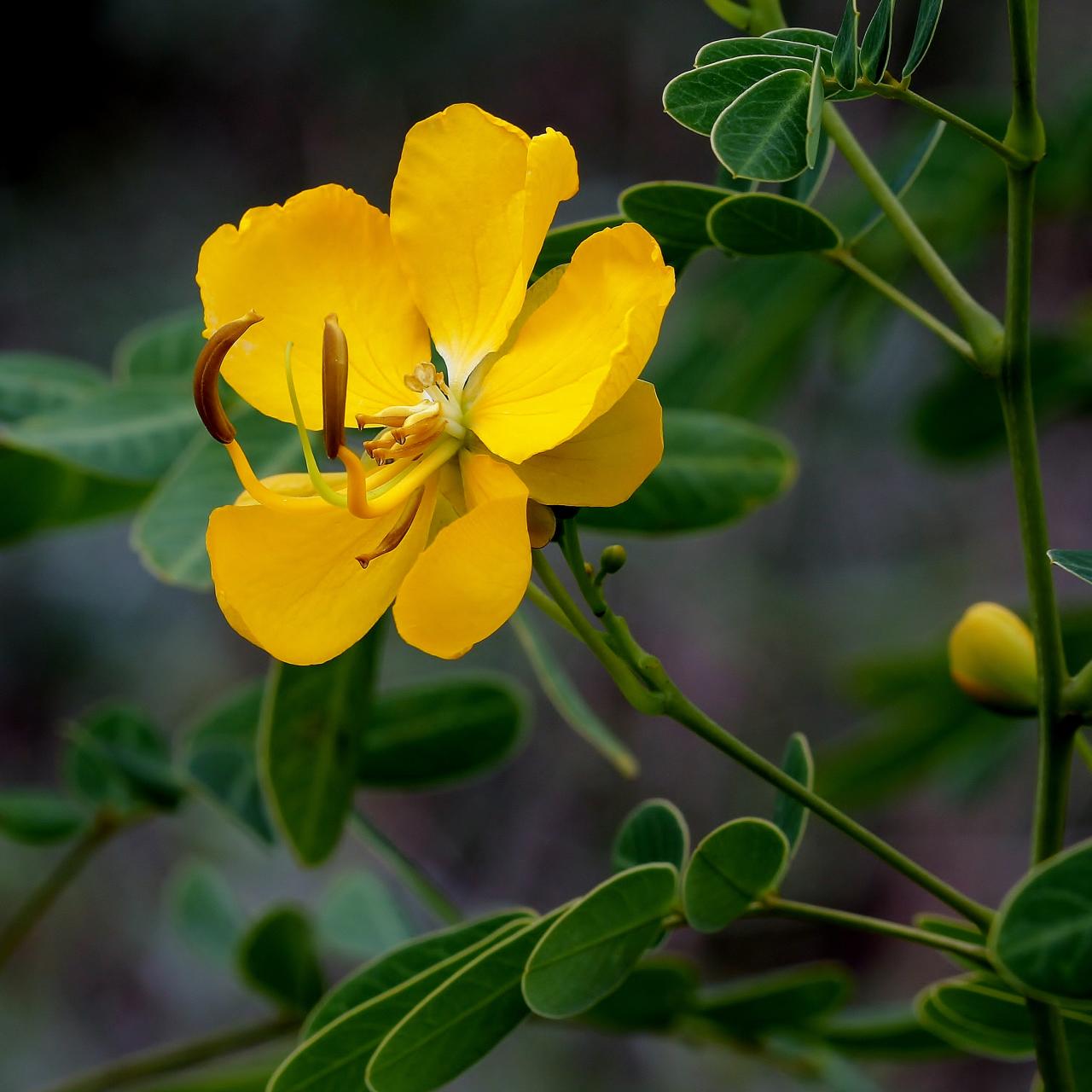
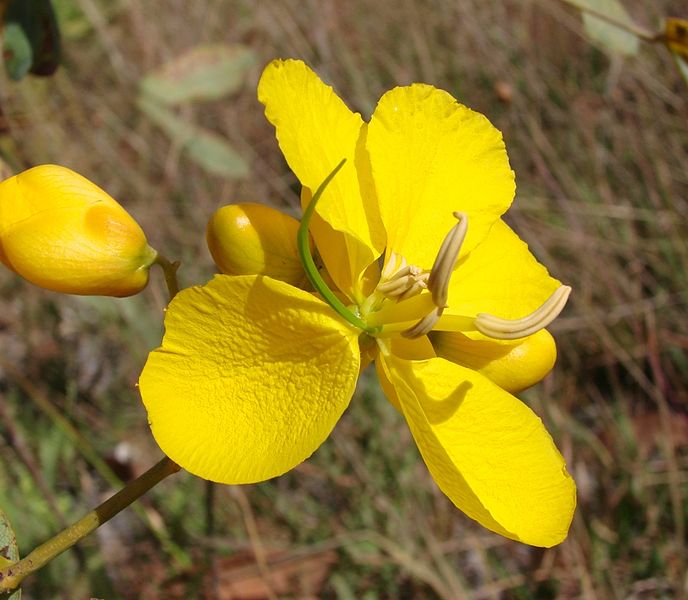
Sprawling evergreen shrub to 4 m tall and wide, with somewhat zigzag, sparsely hairy stems. Leaves alternate, stalked, even-pinnately compound. Leaflets in 3-6 pairs, oblong with rounded tips, terminal largest, to 4 cm long. Petioles with gland above, between lowermost leaflets and occasionally between others. Flowers yellow, 3-4 cm across, in 3- to 12-flowered showy racemes near stem tips. Stamen filaments prominent, curved. Fruit a brown slender, cylindric, glabrous pod 7-12 cm long.
Habitat
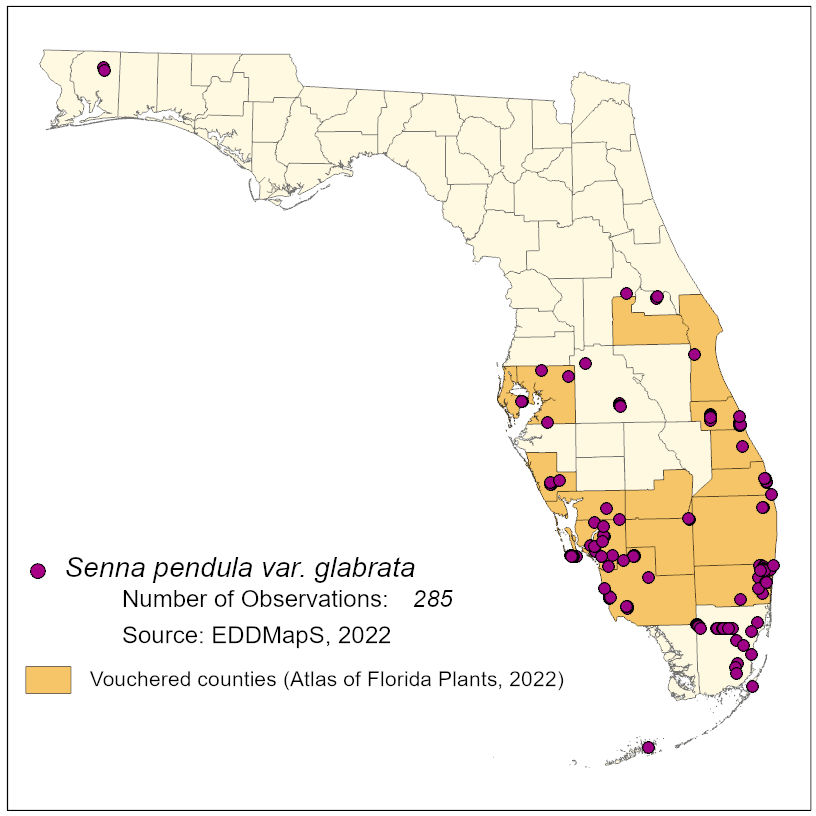
Hardwood hammock, basin swamp, coastal strands and canal banks
Comments
Plants will come back if tops killed by freezing. Showy flowers produced in late fall to early winter.
Control Methods
- Manual: Mechanical: Isolated plants can be dug out and roots removed.
- Chemical: Basal bark (Fluroxypyr 200 g/L) or cut stump (Glyphosate 41.0% L 360 g/L)
- Biological: NA
Control Notes
NA
References
Dave's Garden. 2014. PlantFiles: Valamuerto, Senna pendula. http://davesgarden.com/guides/pf/go/142451/. Accessed on June 20, 2014.
Langeland, K.A., H.M. Cherry, C.M. McCormick, K.C. Burks. 2008. Identification and Biology of Non-Native Plants in Florida's Natural Areas-Second Edition. IFAS Publication SP 257. University of Florida, Gainesville, Florida.
Queensland Government. 2013. Weeds of Australia: Fact Sheet - Easter cassia (Senna pendula var. glabrata). http://www.daff.qld.gov.au/__data/assets/pdf_file/0004/66712/IPA-Easter-Cassia-PP79.pdf. Accessed on June 26, 2014.