
Schinus terebinthifolia
Common Name: Brazilian pepper
Family: Anacardiaceae
Common Synonyms: Schinus terebinthifolia var. raddiana
USDA Hardiness Zone: 9a-11
Growth Habit: Shrub, Tree
Origin: Brazil, Argentina, Paraguay
FISC Category: 1
FDACS Listed Noxious Weed: Yes
Introduction Date: 1840s
IFAS Assessment:
- North: PROHIBITED
- Central: PROHIBITED
- South: PROHIBITED
Description
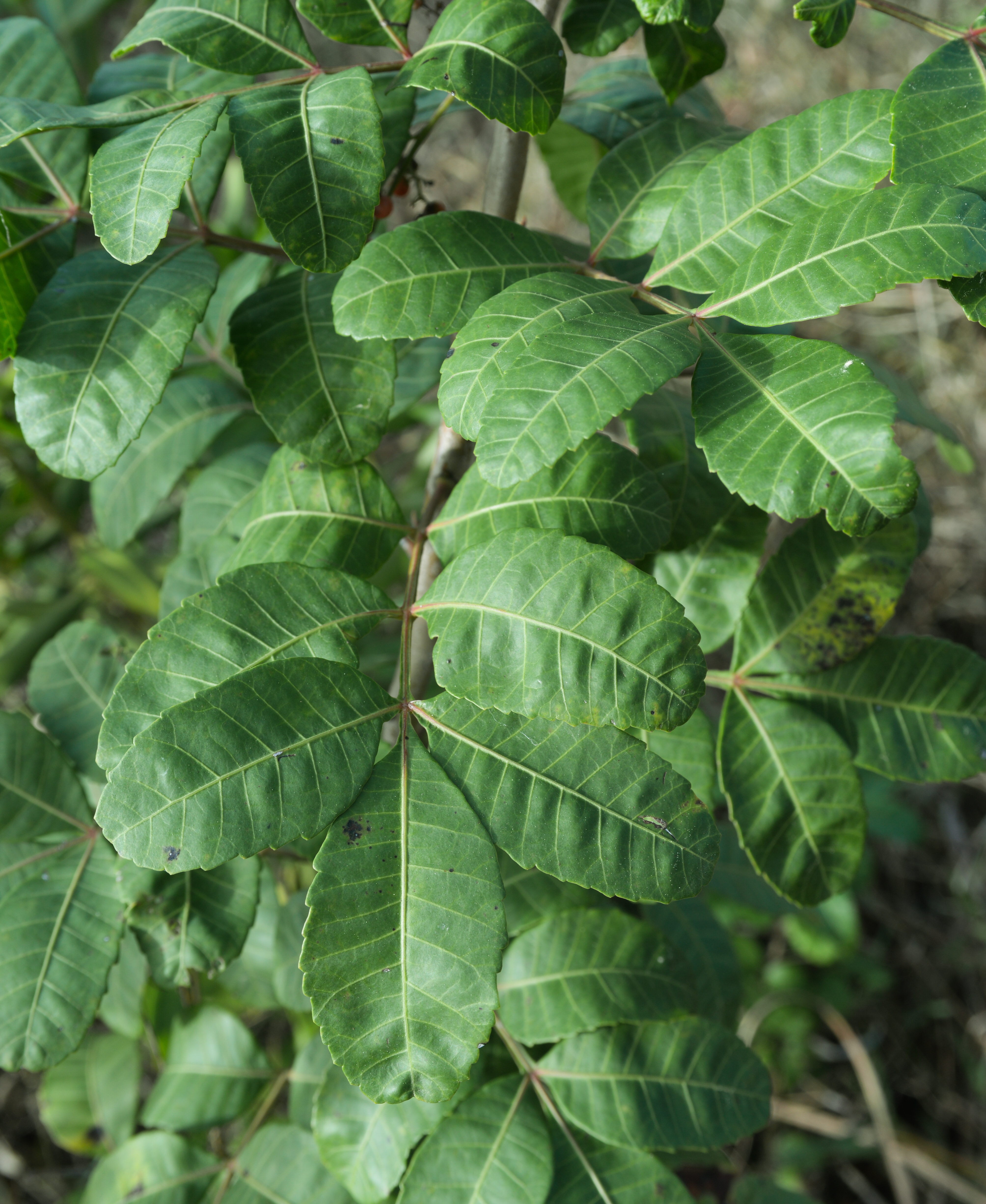
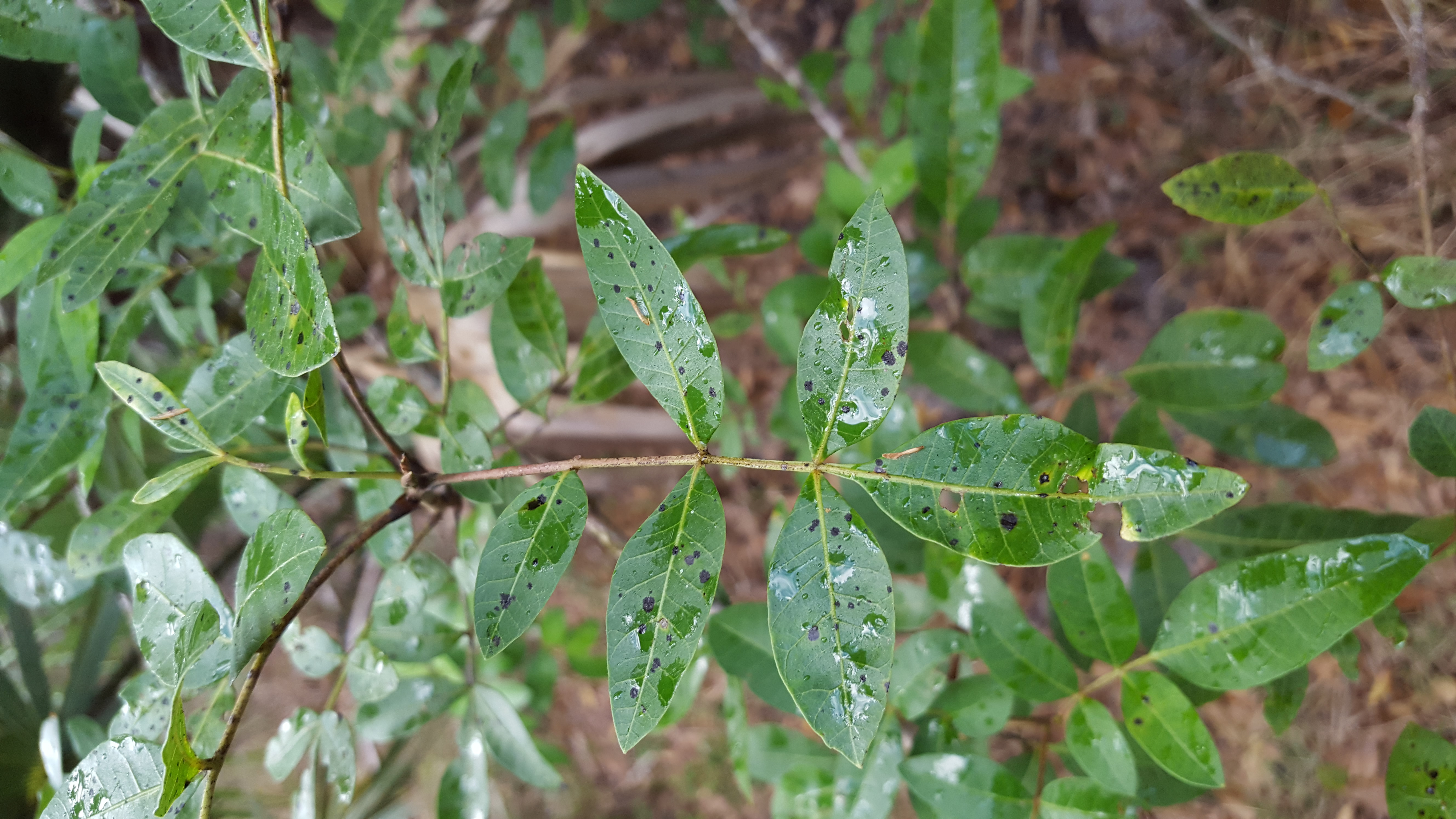
Shrub or small tree to 13 m tall, with a short trunk and numerous long, arching, intertwined branches. Leaves evergreen, alternate, odd-pinnately compound, petiole reddish, often winged, leaflets 3 to 11, sessile, oblong to elliptic, usually toothed, 2.5 to 5 cm long, aromatic with a resinous odor when crushed. Flowers white, small, 2 mm diameter, in axillary panicles, petals 5. Male and female flowers on separate plants. Fruit a globose drupe, 6 mm in diameter, green, turning red when ripe.
Habitat
Scrub, shell mound, sand dune, maritime hammock, coastal strand, coastal hammock, coastal berm, cabbage palm savannah, hydric hammock, wet flatwood, strand swamp, mangrove forests, and ruderal communities.
Comments
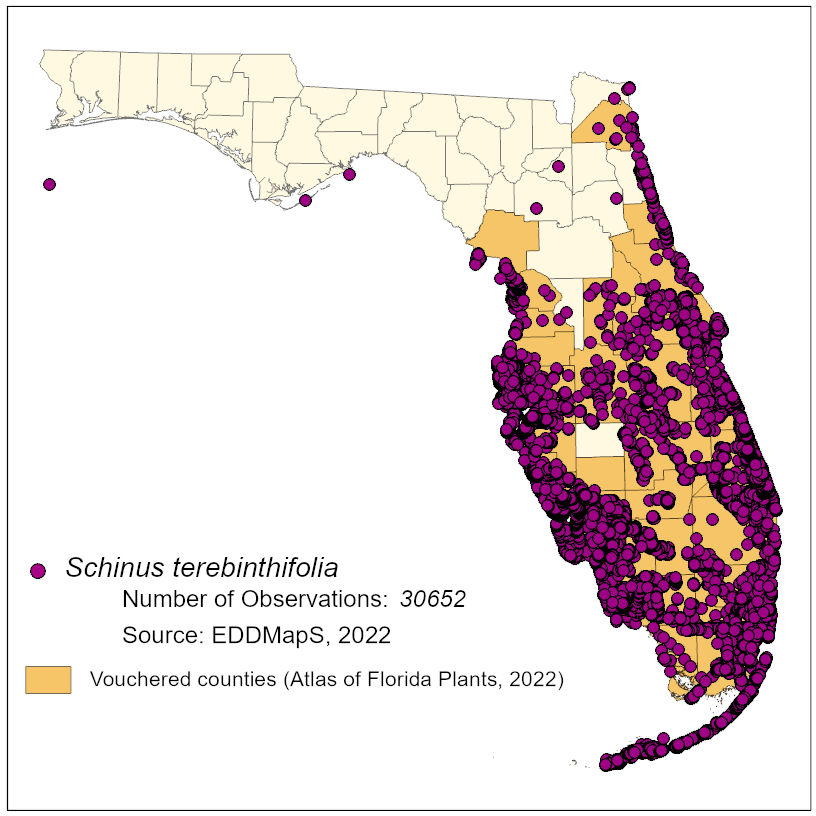
Widely established except in panhandle and colder north central part of state. Some people experience allergic reactions to the sap. Trees produce enormous quantities of bird-dispersed fruit.
Control Methods
- Manual: Mechanical: cutting of entire plant.
- Chemical: Cut-stump (50% triclopyr amine, 10% triclopyr ester, 50%-100% glysophate), basal bark (10%-20% triclopyr ester), foliar (triclopyr ester, triclopyr amine, glysophate according to label directions).
- Biological: NA
Control Notes
Note: Glyphosate 41.0% L products are less effective when used alone in spring and early summer.
References
Langeland, K.A., H.M. Cherry, C.M. McCormick, K.C. Burks. 2008. Identification and Biology of Non-Native Plants in Florida's Natural Areas-Second Edition. IFAS Publication SP 257. University of Florida, Gainesville, Florida.
Langeland, K.A., J.A. Ferrell, B. Sellers, G.E. MacDonald, and R.K. Stocker. 2011. Integrated management of non-native plants in natural areas of Florida. EDIS publication SP 242. University of Florida, Gainesville, Florida.