
Cenchrus setaceus
Common Name: green fountaingrass
Family: Poaceae
Common Synonyms: Pennisetum setaceum
USDA Hardiness Zone: 9a-11
Growth Habit: Perennial grass
Origin: North Africa and Middle East
FISC Category: 2
FDACS Listed Noxious Weed: No
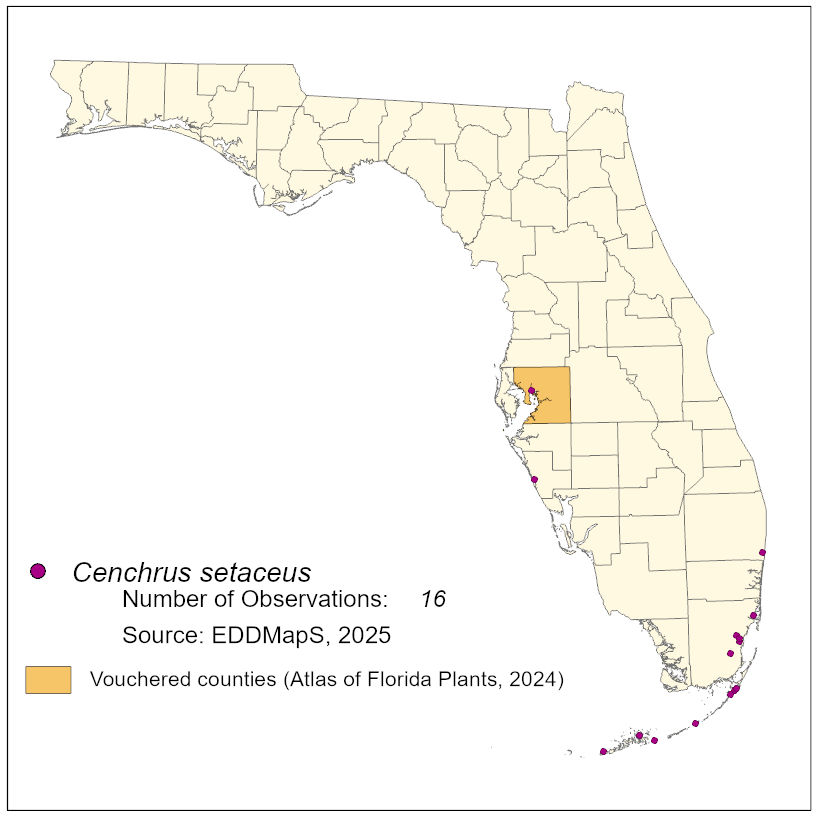
Introduction Date: Earliest Florida specimen vouchered in 1962
IFAS Assessment:
- North: OK
- Central: OK
- South: OK
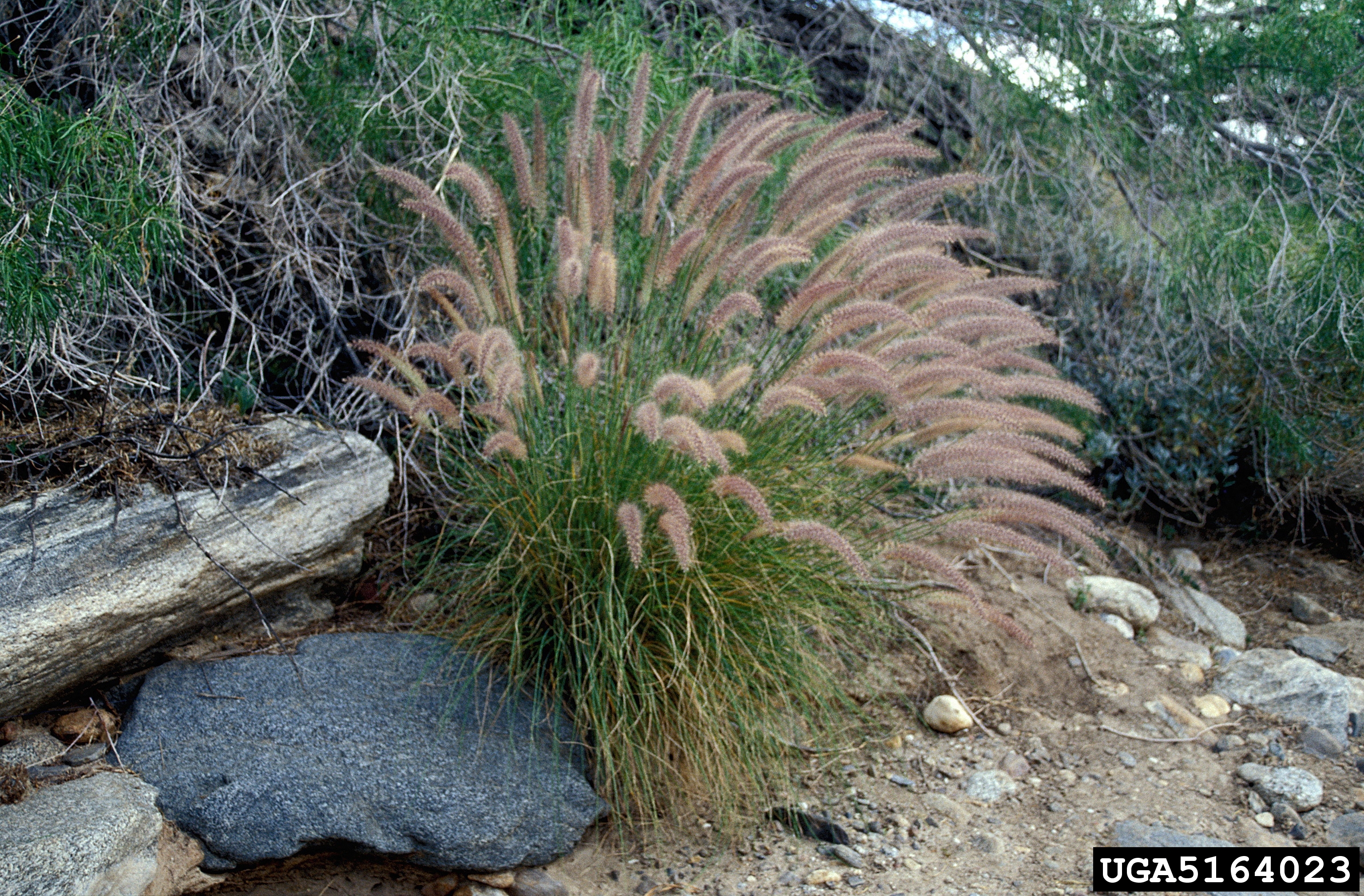
Description
Perennial, mound forming, grass to 1.3 m tall. Tufted, erect stems. Leaves narrowly linear, flat or inrolled, to 0.6 m long and 6 mm wide, upper surface rough, ligule of dense silky hairs. Inflorescence a dense, terminal panicle, cylindrical, nodding to 35 cm long. Spikelets in clusters of 1-3 with plumose bristles towards the base, usually 4-5 times longer than the spikelets.
Habitat
Scrub, pine rockland
Comments
Popular landscape plant, stimulated by fire.
Control Methods
- Manual: NA
- Chemical: NA
- Biological: NA
Control Notes
No specific recommendations available, grasses can generally be treated with foliar application of glyphosate.
References
Dave's Garden. 2014. PlantFiles: Rose fountain grass. http://davesgarden.com/guides/pf/go/1491/. Accessed on June 23, 2014.
Langeland, K.A., H.M. Cherry, C.M. McCormick, K.C. Burks. 2008. Identification and Biology of Non-Native Plants in Florida's Natural Areas-Second Edition. IFAS Publication SP 257. University of Florida, Gainesville, Florida.
Langeland, K.A., J.A. Ferrell, B. Sellers, G.E. MacDonald, and R.K. Stocker. 2011. Integrated management of non-native plants in natural areas of Florida. EDIS publication SP 242. University of Florida, Gainesville, Florida.
Wunderlin, R. P., and B. F. Hansen. 2008. Atlas of Florida Vascular Plants (http://florida.plantatlas.usf.edu/).[S. M. Landry and K. N. Campbell (application development), Florida Center for Community Design and Research.] Institute for Systematic Botany, University of South Florida, Tampa.