
Manilkara zapota
Common Name: sapodilla
Family: Sapotaceae
Common Synonyms: Achras zapota, Sapota achras
USDA Hardiness Zone: 10b-11
Growth Habit: Tree
Origin: Mexico and Central America
FISC Category: 1
FDACS Listed Noxious Weed: No
Introduction Date: 1883
IFAS Assessment:
- North: OK
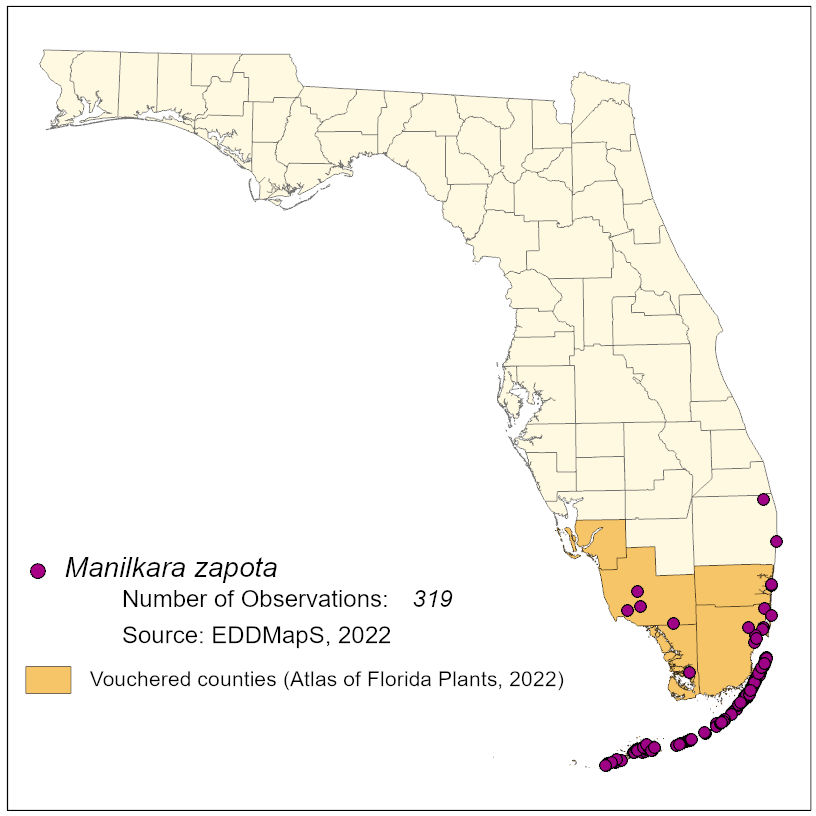
- Central: INVASIVE
- South: INVASIVE
Description
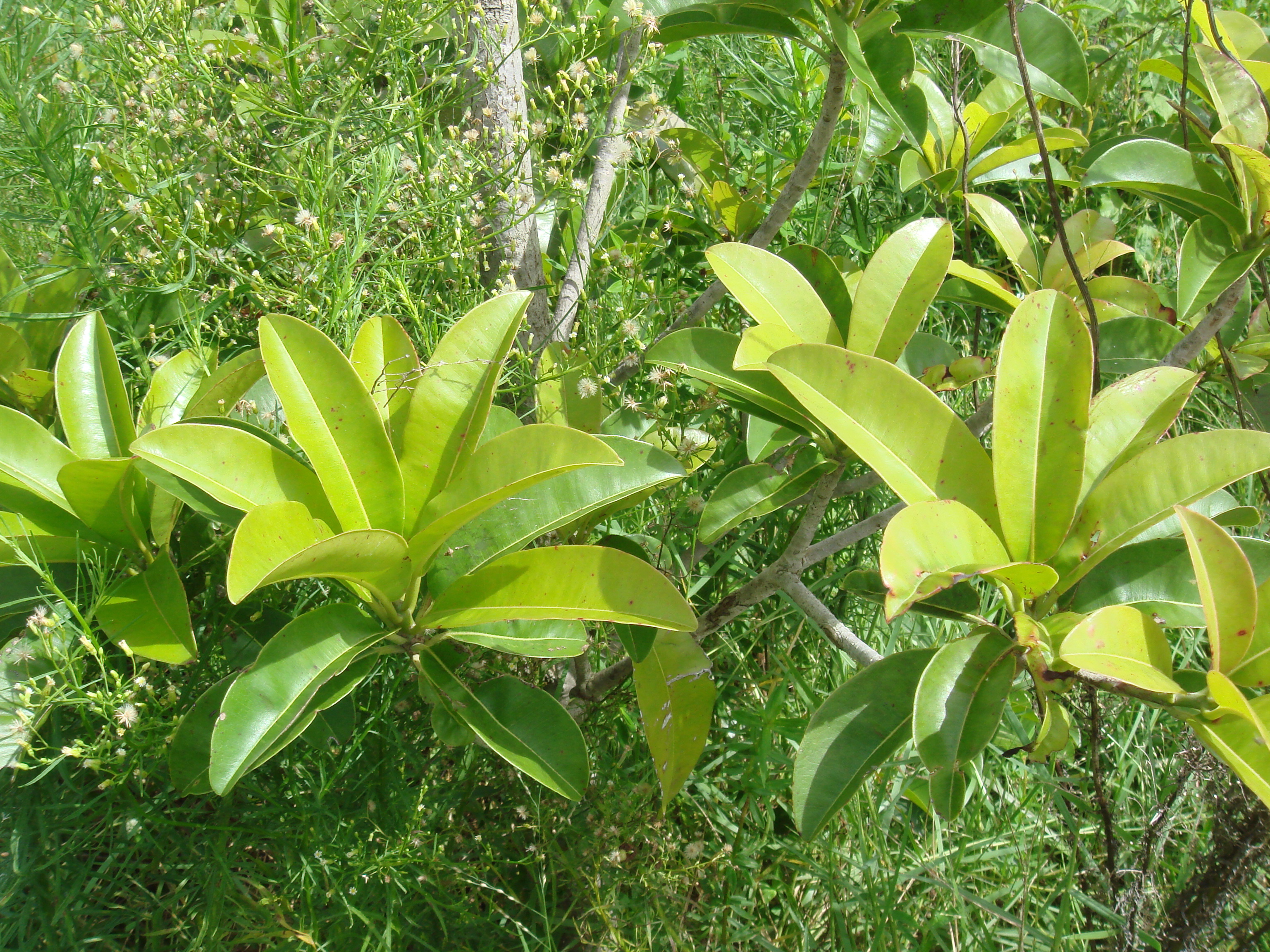
An evergreen tree up to 20 m tall with a wide, stout trunk. Branches are brownish and hairy. Leaves are alternate and often crowded at ends of branchlets. Young leaves are pubescent and brown on the underside. Flowers white on long petioles from leaf axils, tube shaped up to 5mm with 6 lobes. The fruit is brown with tough skin, up to 8 cm wide. Meat of fruit is a brown, mealy pulp, with hard black seeds. All plant parts can exude latex.
Habitat
Hammocks and disturbed sites.
Comments
Planted as a tropical fruit tree for the sapodilla fruits. Occurs in hardwood hammocks and shaded habitats, shading and dense seeding a problem. All plant parts can exude latex when damaged.
Control Methods
- Manual: Mechanical: Hand pull seedlings.
- Chemical: Basal bark (10%-20% triclopyr ester), larger trees may require several applications. Cut stump (50% triclopyr amine). [IFAS]
- Biological: NA
Control Notes
NA
References
IFAS, Center for Aquatic and Invasive Plants. 2018. Manilkara zapota. http://plants.ifas.ufl.edu/plant-directory/manilkara-zapota/. Accessed on June 11, 2018.
Langeland, K.A., J.A. Ferrell, B. Sellers, G.E. MacDonald, and R.K. Stocker. 2011. Integrated management of non-native plants in natural areas of Florida. EDIS publication SP 242. University of Florida, Gainesville, Florida.
Invasive and Non-Native Plants You Should Know, Recognition Cards, by A. Richard and V. Ramey, 2007. UF/IFAS Center for Aquatic and Invasive Plants, Publ. No. SP 431.
IFAS, UF. 2017. Assessment of Non-Native Plants in Florida's Natural Areas. Manilkara zapota. https://assessment.ifas.ufl.edu/assessments/Manilkara-zapota/ Accessed June 11, 2018.